
Euchre Classic Card Game
FIOGONIA LIMITEDCard
4.13.06K Reviews
- Version
- 1.6.1
- Installs
- 500.00K
- Age Rating
- Everyone
Screenshots
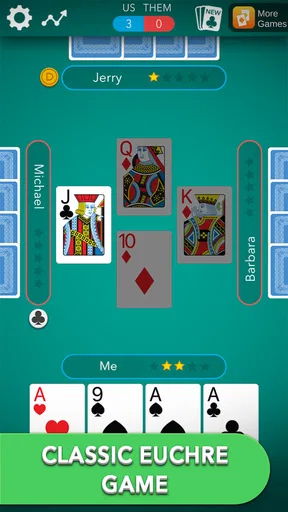
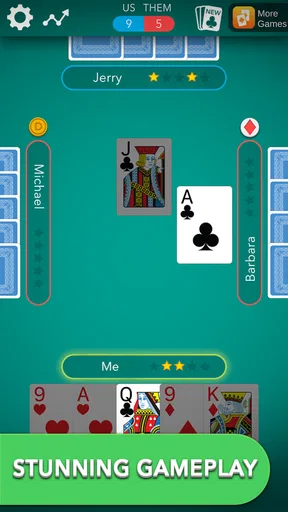
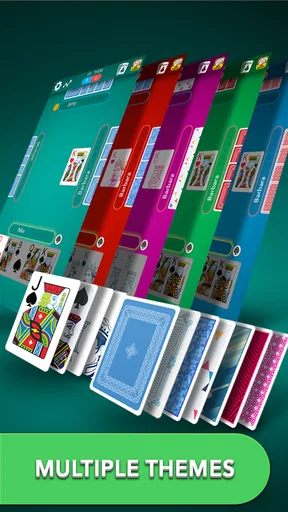
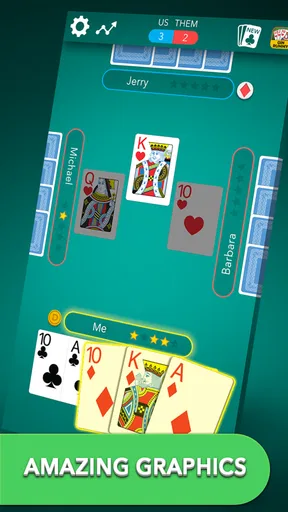

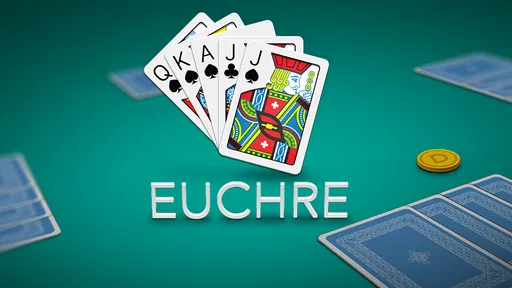
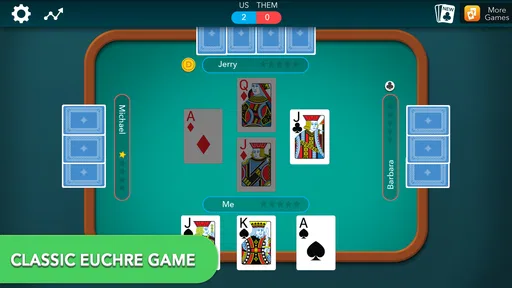
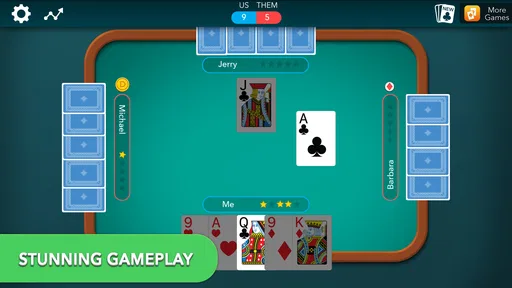
Our Review of Euchre Classic Card Game
 Analysis by Appyee
I spent time with Euchre Classic Card Game as a straightforward way to play Euchre without setting up a table, finding three other players, or carrying a physical deck. It is a free card game from FIOGONIA LIMITED, built around the familiar trick-taking rules of Euchre and available for both online and offline play. That combination makes it easy to pick up for a quick match, although the experience is more focused than a large card-game collection.
My overall impression is that this is best understood as a dedicated Euchre companion rather than an ambitious all-purpose card platform. It gives the game room to breathe, keeps the interface centered on bidding and tricks, and lets me practice even when I am not connected. If you already enjoy Euchre, that narrow focus is a strength. If you are looking for several card games, a deep campaign, or a highly social game with lots of extra activities, the limited scope may feel restrictive.
How the game feels in everyday use
The first thing I noticed is how quickly a round can fit into a normal day. I can imagine opening it during a short break, playing a few hands, and closing it without needing to commit to a long session. Euchre naturally works well in that setting because each trick gives the player a small decision to make, while the complete match still has enough structure to feel more meaningful than a single puzzle.
That makes the offline option particularly useful. A train ride, waiting room, or evening away from a reliable connection becomes a practical time to play. I would not treat it as a replacement for meeting friends around a real table, but it is a convenient way to keep the rules fresh and maintain a bit of rhythm between in-person games.
The online side serves a different purpose. Playing against people can bring more unpredictability than facing a predictable computer opponent, and Euchre benefits from that because the value of a bid depends on how others react. Still, online card games depend heavily on the quality of the player pool and the feel of the matchmaking experience. I would approach it as an accessible way to find a game, not as a guarantee of a lively competitive community every time I open it.
The game is suitable for Everyone, which fits the basic presentation and the nature of the activity. There is no need to learn a complicated control scheme: the challenge comes from reading the hand, judging the trump situation, and deciding when a risky bid is justified. That simplicity is helpful for newcomers, though a first-time player may still need a few rounds to understand why a seemingly strong hand can fail when the lead and trump choices work against it.
Learning the decisions behind each hand
Euchre looks simple because the deck and hand are small, but the important choices arrive quickly. I found that the most useful practice is not merely trying to win every trick. It is watching how the opening decision changes the rest of the hand. Calling trump can give control, yet it also tells the table something about the strength of the hand. Passing may feel passive, but it can preserve a better chance in the next decision.
For a new player, I recommend treating the offline mode as a training table rather than rushing immediately into online matches. Pay attention to which cards are likely to remain powerful after trump is selected, and notice how often a tempting off-suit card becomes less useful once the hand develops. This approach turns short sessions into deliberate practice instead of repeated guesses.
A less obvious benefit is that the app can help experienced players identify habits. I often learn more from a hand where I misjudged the timing than from a comfortable win. After a failed bid, I can ask whether the problem was the original call, an overly aggressive lead, or a failure to account for the partner's likely position. That kind of self-review is more valuable than simply counting victories.
There is also a useful distinction between playing for entertainment and using the game to sharpen judgment. Someone who wants a relaxing card break can make quick decisions and enjoy the flow. Someone who wants to improve should slow down, consider the likely distribution of cards, and avoid treating every strong-looking hand as an automatic call. The app does not need to become a study tool for it to support that more thoughtful style.
Free access and what the price means
The important cost point is clear: the game itself is free to download and play. That makes it easy to test without committing money first, which is exactly what I want from a specialized card game. I can find out whether the rules, pacing, and online experience suit me before deciding whether it deserves a permanent place on my phone.
There are in-app purchases priced from $4.99 to $29.99 per item. I would therefore separate the basic value from any optional spending. The free entry is enough to judge the core experience, while the purchase range means that players should look carefully at what each item provides before paying. I would not assume that spending is necessary to understand or enjoy the game, and I would set a personal limit rather than buying impulsively during a long session.
For me, the strongest value comes from the combination of free access and offline availability. A card game does not need elaborate production to be useful; it needs dependable rounds, readable decisions, and enough convenience to make playing easy. If those basics work for you, the free version can already serve as a compact Euchre table in your pocket.
The value is less convincing for a player who expects a broad catalog. A general card app may offer more variety in exchange for a busier interface, while a physical deck costs nothing after purchase and supports face-to-face play. This game earns its place by removing setup and providing a digital opponent or online match, not by replacing every other way to play cards.
Where the focused design helps
Because the game concentrates on Euchre, I do not have to navigate unrelated modes before reaching the kind of hand I want. That focus makes it easier to build a routine: open the game, choose the appropriate way to play, and get into the round. For a player who already knows the rules, this is more appealing than an oversized card app that treats Euchre as one small option among many.
The compact format also makes the game a reasonable choice for practicing specific situations. I can use a few offline hands to think about when to order up, when to pass, and how to protect a likely trick. The point is not that every hand becomes a lesson, but that the short cycle from deal to decision encourages repetition without demanding a large time investment.
Another practical strength is accessibility across older devices. The minimum operating-system requirement is Android 7.0, so the game is not aimed only at people with the newest phones. That matters for a simple card title: if the device can run it comfortably, there is little reason for the hardware itself to become part of the decision.
The developer, FIOGONIA LIMITED, has kept the identity of the product easy to understand. It is a classic Euchre game, not a card-themed collection of unrelated diversions. I appreciate that clarity because it lets me decide quickly whether the app matches what I want to play today.
The tradeoffs I would consider first
The narrow focus is also the main limitation. If I finish a few matches and want a change of pace, I cannot rely on this title as a complete card-game library. Players who alternate between solitaire, rummy, hearts, and other formats will probably get better value from a broader alternative, even if that alternative feels less polished around Euchre itself.
Online play can introduce another kind of friction. Human opponents bring variety, but they also make the pace less predictable than offline play. A match may feel engaging when everyone is attentive and frustrating when the rhythm breaks. I would choose offline sessions when I want control over my time and online sessions when the social unpredictability is part of the appeal.
There is a strategic tradeoff in the simplicity, too. A clean card table helps me focus, but it may not satisfy players who want extensive progression, elaborate presentation, or a long-term achievement system. I would not choose this game expecting a role-playing layer or a large narrative structure. Its appeal comes from the hand itself.
The purchase range deserves sensible caution as well. Free access lowers the risk of trying the game, but optional items can change how someone evaluates its overall value. My advice is to play enough free rounds to answer three questions: Do I enjoy the rules in digital form? Is the offline opponent satisfying enough for practice? Does the online experience add something I actually want? If the answer to those questions is no, spending more will not solve the basic mismatch.
Who is likely to enjoy it most
I would recommend it first to people who already know Euchre and want quick access to familiar hands. It is also a good candidate for someone learning the game who prefers repeated practice over reading a long explanation. The offline option gives that player room to make mistakes privately, while online play offers a path toward more varied opponents when confidence improves.
It suits casual players particularly well. Someone who has ten or fifteen minutes and wants a structured distraction can get more satisfaction here than from a purely luck-based time killer. The decisions are small enough to fit into a break but meaningful enough to reward attention.
It can also work for former table players who miss the game when friends are unavailable. The digital version cannot reproduce conversation, gestures, or the feeling of a shared table, but it can preserve the basic pattern of bidding, leading, following suit, and counting tricks. That makes it a useful substitute between gatherings rather than a complete replacement for them.
I would be more hesitant to recommend it to a person who has never played any trick-taking game and wants extensive instruction. The rules are learnable, but the deeper judgment develops through hands, mistakes, and observation. A friend or a more tutorial-heavy product may be a gentler starting point if the player needs every decision explained before playing.
I would also point elsewhere for anyone who mainly wants social interaction, a large variety of card games, or a highly competitive ecosystem. This title is most convincing when the question is, “Can I play Euchre conveniently right now?” It is less convincing when the question is, “What is the biggest card-game experience I can install?”
My practical recommendation
Before judging the game, I would play it in two different ways. First, use offline matches to learn the pace and see whether the computer play gives you enough resistance to remain interesting. Then try online play to find out whether the social side improves the experience or simply adds waiting and unpredictability. Those two tests reveal more than the store summary because they separate the app's dependable core from the conditions around each match.
I would also keep a simple mental record of decisions rather than wins. After a hand, remember one call that worked and one that did not. Were you relying on a strong trump card, counting on your partner, or hoping the opponents would not hold the missing suit? This habit makes the game more rewarding and helps prevent the common mistake of treating a lucky result as proof that a risky choice was correct.
For a short daily routine, I would play a handful of hands offline, stop after a clear mistake, and return later instead of forcing a long session. That keeps the game from becoming repetitive and gives each round a purpose. If I wanted a more social evening, I would switch to online play or use a physical deck with friends, depending on whether convenience or conversation mattered more.
The current version is 1.6.1, and the game has been available since March 16, 2021. It has built a visible audience, with an average rating of 4.1 from around 8.5 thousand ratings and over 500 thousand installs. Those figures suggest that the concept has found a real audience, but they should not replace personal testing: Euchre preferences are strongly tied to how much a player values offline practice, online opponents, and traditional table play.
In the end, I see this as a sensible free download for a specific player, not an automatic recommendation for everyone. Its best value is convenient access to Euchre without a paid entry requirement. The offline mode makes it useful when a connection or a group is unavailable, while online play gives the familiar rules a more social option. The tradeoff is that the experience stays tightly centered on one card game, and optional purchases ranging from $4.99 to $29.99 per item mean I would inspect them carefully before spending.
My verdict is to try it if Euchre is already the game you want. Give the free version enough time to test both offline practice and online play, then decide whether the focused format fits your habits. I would skip it in favor of a broader card collection if variety matters more than depth, and I would choose a physical deck when the real goal is conversation around a table. For everyone else, this is a convenient, focused way to keep a classic trick-taking game close at hand.
Verdict
Strengths of Euchre Classic Card Game
- Clear card visuals make suits and trump easy to identify.
- Quick rounds fit well into short gaming sessions.
- Simple controls are comfortable on phones and tablets.
- Offline play is useful when traveling or without internet.
- Classic rules make it approachable for longtime Euchre players.
Limitations of Euchre Classic Card Game
- Limited variety may make repeated matches feel predictable.
- Some players may find the computer opponents inconsistent.
- Ads can interrupt the flow in the free version.
- New players may need time to learn Euchre terminology.
- Customization options may feel basic compared with larger card games.
Other Releases by FIOGONIA LIMITED
View All
Dominos Game Classic Dominoes
Board4.7

Word Galaxy Challenge
Word4.7

Spades - Classic Card Game
Card4.7

Hearts - Card Game Classic
Card4.5
Similar Picks in This Category
View All
Solitaire - Classic Card Games
MobilityWare4.6

UNO!™
Mattel163 Limited4.3

Spider Solitaire: Card Games
MobilityWare4.6

Solitaire.com - Classic Cards
Tripledot Studios Limited4.7

Plants vs. Zombies™ Heroes
ELECTRONIC ARTS4.1

Hearthstone
Blizzard Entertainment, Inc.4.1
You May Also Like
View All
Frequently Asked Questions
What is Euchre Classic Card Game, and how is it played?
Euchre Classic Card Game is a digital version of the traditional trick-taking card game, usually played by four people in two partnerships. Players receive a small hand of cards, choose a trump suit, and compete to win tricks. The app is designed to recreate the core rules and turn-based strategy of physical Euchre in a convenient mobile format.
Can I play Euchre Classic Card Game offline or without creating an account?
Availability of offline play and account requirements may depend on the version installed and the platform you use. In general, many Euchre apps offer games against computer-controlled opponents, which can be useful when you are traveling or have no reliable connection. Check the app’s current store description before downloading if offline access or registration is essential.
Does the game support multiplayer matches with friends or online opponents?
Euchre Classic Card Game may include single-player matches as well as online or local multiplayer options, depending on the edition and its latest update. Multiplayer features can be especially enjoyable because Euchre depends on communication, timing, and partnership strategy. Review the in-app menus and store listing to confirm whether private rooms, invitations, or matchmaking are supported.
Is Euchre Classic Card Game suitable for beginners who do not know the rules?
Yes, it can be a practical way for new players to learn Euchre, particularly if the game explains bidding, trump selection, scoring, and trick order. Beginners should still expect a short adjustment period because cards such as the right and left bowers can change their rank. Playing practice rounds against computer opponents is a helpful way to understand the basics.
Are there advertisements, in-app purchases, or privacy concerns to consider?
Before installing Euchre Classic Card Game, check the Google Play or App Store listing for its current advertising, purchase, and data-collection details. Some free card games display ads between rounds or offer optional purchases for removing advertising and unlocking features. Permissions and privacy practices can also change with updates, so reviewing the official listing and privacy policy is recommended.
Play our best games!


